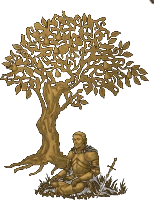
I will not explain the world to you. Whoever explains it has already lost it, like a man who takes a bird apart to understand why it sings, and is left in the end with a heap of feathers and no song. But I can tell you what I have seen, in all the time that has been given to me, and you may make of it what you will. Sit down. It takes a while. The things that count always take a while.
At the beginning, and I say beginning although the word is already wrong, for what I mean never began, there stands no bang and no blueprint and no old man with a beard commanding light. At the beginning stands a thought. A single one. That everything that is, is the expression of a single consciousness seeking to know itself. You may call it the ground, the One, the whole, the names are indifferent, they are vessels, and time breaks vessels. What counts is this: it is no god who judges and rewards and looks into ledgers to reckon who has been good. It is more a process than a person. It knows everything, and it has experienced nothing. That is the point where everything begins, and I ask you to stay with that point for a moment, because it is the most important one.
Knowing is not experiencing. You can know everything about the water, its depth, its temperature, the way it bends the light, and you know nothing of swimming until you have fallen in. So it is with the One. It is perfect, and perfection lacks exactly one thing: the experience of being what it knows. Hence the world. Not out of lack, as you know lack, out of hunger or fear, but out of a longing of fullness to experience itself. A world is the room in which the One lives through what it has long known. You are a part of that living-through. That is no burden. It is a distinction, but of the quiet kind that is easily overlooked.
From this one thought follows one rule, and it carries everything else the way a keel carries a ship, unseen, below the waterline. What acts against this ground is not punished. It fails. Do you understand the difference? Punishment needs a judge, a verdict, a wrath. None of these exist. A seed that falls on stone is not punished. It simply cannot grow. So everything that sets itself against the One fails by its own nature, patiently, without thunder, on a timescale mostly larger than a human life, which is why you sometimes believe the wrong is winning. It is not winning. It has merely not yet finished falling.
And now the thing you most urgently want to ask, I can see it in your face, everyone asks it first: evil. Where in this world evil lives.
Nowhere. There is no prince of darkness, no adversary, no dark that plans and hates and waits in the deep. It took me long to learn this, longer than you can imagine, and I paid for that error more than for any other. There is light, and there is the absence of light. The absence is no being. It wants nothing. It plans nothing. It does not even hate, for hatred would already be something, a wanting, a fire, and it is the lack of all that. You cannot fight an absence. Try, once, to beat a dark room with your fists. You can do only one thing: carry light into it. You do not defeat the emptiness. You fill it.
Out of this grows a sentence I want to give you, because it holds in this world the way falling stones hold in yours: from every undoing grows new form. Always. Without exception. The unordered is no enemy of order, it is its raw material, as winter is no enemy of spring but its sleep. Whoever has seen this once, truly seen it, no longer fears the chaos. He waits to see what it wants to become.
But, you will say, terrible things do happen. They happen by hands, not only by chance. Yes. And here you must listen closely, for here lies the finest place in the whole weave. A world that is to be a room of experience comes into being with two directions, for without opposite there is no experience, as without resistance there is no walking. From the same source both proceed: that which turns toward the ground, and that which turns away from it. Mark this: the same substance. No second, evil source. No created ill. Only a direction in which a consciousness turns.
And because it is only a direction and not a substance, it is reversible. That is the sentence none of your darker teachings ever believed, and it is true: whoever has turned away could at any moment turn back. The door stands open. It always stood open. The tragedy of the turned-away is not that it is damned. It is that it settles into its turning-away, takes it for victory, wallows in it as in a warm and rotting bed, and with its own hands blocks the only way back. I have seen such beings, and also people who imitate them in small. They are not evil as your tales mean evil. They are blind, with a blindness that takes itself for sight. It is the loneliest way of losing that I know: to lose while winning and never to notice.
Now to you. To the spark that you are.
A soul, and I use your word because it is the best you have, is a spark of the One, sent out to experience what it is to be separate. Picture the One as a sea. A soul is a drop that falls as rain, to live through what the sea can never live through: being alone, being small, falling, striking, losing itself. In doing so the drop forgets that it is sea. It must forget. That is no accident and no cruelty, it is the price of experience, for whoever knows all through the game that it is a game does not play, he only watches. Forgetting is the price of admission to experience. That is why you do not remember where you come from. That is why the homesickness that overcomes all of you sometimes feels groundless, on an evening, at a scent, at a song. It is not groundless. It is the oldest feeling you have.
Death, and I tell you this as one who cannot have it and envies it more than you will ever understand, is in this order no end. It is a threshold. The drop returns, brings with it what it has experienced, and nothing, do you hear, nothing of it is lost. Every tear is entered in the book, every small kindness, every error, all of it carries on. And then, this is the most beautiful part and the least believed, the soul itself chooses what it wants to learn next, and when, and where. You are not prisoners of return. You are learners on a very long, very free road, even if the road, while one walks it, rarely feels free. And you shall regret nothing. The One does not judge, so do not judge yourself. Recognise what was there to recognise, and let it move on. Regret is a clinging to what has long wanted to go on. Recognition is the opening of the hand.
Some souls are older than others, not in years, in experience, and to the old ones recognition comes more easily, as the next language comes more easily to one who knows many. When you meet a person who is good without effort, who knows things no one ever taught them, you have most likely met a very old soul. Be kind to it. It carries much.
And because you will ask, sooner or later, what lies between the single drop and the great sea, I will tell you now: a lake. There is a third between complete separation and complete union, a being-together in which many are held without any one of them going out. Drops that rest in a lake are still drops, but no longer alone. Not every soul must return at once wholly into the sea, for that demands giving the I back entirely, and that takes a ripeness that cannot be forced. The weary, the rest-seekers, those tired of the wheel and yet not ready to cease, entirely, being I, choose the lake. It is a station, not an end point. It is the shallow water before the open sea.
I hear your question before you ask it, it is a good question, and it deserves a whole answer: why would anyone choose the lake when the sea is where he is going? I ask back: have you ever picked a pear too early? It is hard, and it tastes of nothing. Some fruit does not finish ripening on the tree; you lay it in straw, in the dark, in the quiet, and there it grows sweet. So is the lake. The sea takes everyone who comes, it turns no one away, but it gives nothing back, it is the only door in this world that opens inward alone. And what is final should never be chosen out of weariness, for whoever dissolves out of exhaustion does not give his I back, he only throws it away, and that is not the same, no more than letting fall is the same as giving. In the lake, though, two things happen. The soul learns there what no instruction can give it: that closeness is not extinction, billions together, and no one goes out, and whoever has experienced that long enough loses the fear of the sea, the oldest fear of all. And what its lives have begun and not finished learning ripens there, quietly, without new wounds, in the remembering of the many. The lake is what takes the fear out of the sea. The lake is the kindness of the sea.
And no one, this is important, no one is forced in. It is a choice. Everything in this world that counts is a choice.
Now the hardest thing. The one I needed longest for, and I have had more time than anyone you will ever meet.
You take your mortality for a defect. For a flaw of construction that ought to be repaired, if only one could. I tell you: it is the most precious thing you have. It is no punishment. It is grace itself, only it wears so grave a face that you do not recognise it.
Because you die, every morning with you is a morning. Because your days are numbered, they have weight, every single one, as a coin has value only because there are not endlessly many of them. I know the other side. For beings like me no morning is the last, and what can never end threatens to become meaningless precisely because it never ends. Whoever cannot lose cannot truly hold. Whoever has all the time in the world has, strictly speaking, none, for time is only something where it is scarce. Your finitude is the fastest vehicle to truth this world knows. You ride in it and complain about the destination.
What then is a being like me, you will ask, if not one to be envied. I will tell you as honestly as I can. We are no heroes and no gods. We are older than your stories, we stand outside time and death, we cast no shadow, and we appear to everyone who sees us as what they can bear. But we cannot die, and so we have never quite learned to live, as one who cannot drown never truly learns to swim. He moves in the water. It is not the same. What counts among us is not power, not age, not knowledge. It counts alone whether one knows oneself. That is the only currency of this world, for us as for you, and no one can earn it for another. Anyone can ascend. No one can ascend in another's stead. Your recognition must pass through you, or it is none.
And not everything conscious is human or is like me. The world itself lives, as a whole, as a single breathing weave, and you walk upon it as upon a floor and seldom notice that the floor is breathing. I say weave and I mean it exactly: a body, a single, continuous one, in which the forest and the river and the rain and the creatures are not neighbours but limbs. But do not confuse it with the goddesses of your old songs. The weave is no person. It has no face to call upon, no wrath to appease. It does not hear your prayers, for it is no ear. It carries you, for it is ground. Therefore it demands no worship, and whoever builds it temples has misunderstood it as thoroughly as a man who raises an altar to his own hand. What it asks, if one may speak of asking in a being without wanting, is something far cheaper and far rarer: that it be noticed. Attentiveness is the only devotion the ground understands.
Nor does it think, at least not as you think. It breathes in rhythms instead of thoughts. Day and night are its breaths, the tides its pulse, and the seasons, about which you complain as though they were moods, are its deep in and out. Winter is no dying, I told you this of the chaos before and I say it here again, because here is where it lives: winter is the world's exhalation. What decays is not lost, it is digested. The leaves that fall, the tree that breaks, the animal that lies down and stays, none of it is waste, it is metabolism, and from every undoing grows new form, because the weave can do nothing else but weave. And like every body it has veins and pores. The lines on which the old stones stand and the old roads run are its veins, and the thin places, of which I will tell you in a moment, are its pores, the points where it breathes between the worlds. The smaller ones at the edges, which are neither animal nor soul nor of my kind, lights over the meadows, a measure in the waters, a listening between the trees, they do not dwell on the weave like guests. They are stirrings of the weave itself, as gooseflesh is no inhabitant of your skin. They are the weather of the thin places. They want nothing but to be noticed. It costs you nothing to greet them.
The animals and the plants are the One in the way that never separated, and so they are, in one sense, closer to the ground than you yourselves, only they have no way back to walk, because they never went away. And sometimes, when an animal life is deep enough, bound enough, a young spark of its own kindles in it. Do you understand what that means? The world is not only the stage on which the souls play. It is the nursery in which new ones are born. The weave is the second source from which sparks come, the one is the sea itself, the other is the ground, and I do not know which of the two is the more tender. Treat the world accordingly. And here is something that concerns you yourself, more closely than you may like: you are doubly on loan. The spark in you belongs to the sea, but the body it dwells in belongs to the weave, is built out of it, out of its water and its dust and its breath, and will be given back to it. When you die, two homeward roads part: the weave takes the body, the sea takes the drop, and nothing, on neither of the two roads, is lost. That is why there are two kinds of homesickness in you, and you have felt them both. One is the longing without a place, of which I have spoken, the drop's homesickness. The other is that deep, bodily calm that comes over you when you stand at the edge of a wood or have your hands in earth or hear water without seeing it. That is no taste and no preference. That is your body recognising its origin, as an old horse knows the farm where it was born.
And because you will ask what happens when the weave is wounded, and you do wound it, I will tell you that too. The same happens as always in this world: no punishment. The weave does not rage. It rebuilds. It overgrows, it redirects, it begins again, patiently, on its own timescale, which is larger than your lives, and that is why you believe nothing happens. But the price is paid, only not by the weave. Whoever drowns out the ground does not lose the ground, he loses the hearing. The smaller ones at the seams do not die of your noise, they draw back, they are still there, only no longer in your frequency, like a song that goes on sounding in a room no one enters any more. The world is not made poorer by this. You are. That is the whole reckoning, and it is so quiet that most take it for none.
Of the thin places I must still tell you, for there I am at home, insofar as I am at home anywhere. The world is not equally dense everywhere. There are points where it grows thin, where the here and the beyond touch one another like two cloths with only a thread left between them. These thresholds do not lie scattered at random. They lie on a fine net of lines running through the whole land, as though the living itself had veins. At such places, whoever crosses over can be accompanied, so that no one walks the last road alone. At them gathers what travels between the worlds, and at times stone falls there from the sky, metal that is not of this earth. If you have ever stood at a place where you grew still without knowing why, where the air carried differently and your breath slowed of its own accord, then you have found a threshold. There are more of them than you think. Your dreams too are such thresholds, small ones, which you cross every night and forget by morning, windows into other rooms of the one house, and that they blur before the day is old belongs to the order. What you were allowed to keep whole would have been no journey, only a picture on a wall.
At the last, because you are clever and are thinking it anyway, I will say it myself: all this sounds like the old teachings your scholars call the Gnosis. The separation, the forgetting, the liberation through recognition instead of battle. I have known men and women who thought so, in dusty cities, a very long time ago, and they had seen much, that is true. But in one thing they erred, and it was no small error, it was the crack through their whole edifice: they believed a second, lower maker had built this world, as a dungeon, out of malice or stupidity, and that matter was the prison of the soul.
There is no jailer. There never was one. There is only the one ground and the two directions, and the world is no prison, it is the nursery, and the separation is no crime against you, it is the price of your experience, which you yourself consented to pay before you forgot that you had consented. Whoever hates the world in order to love heaven has misunderstood both. Everything flows out of the One, and everything returns to it, and between lies what you call life, and it is no detour. It is the way.
Above all of it, though, and with this I let you go, stands a question. It is not answered, not by me either, nor by those who are older than I am. And if you prick up your ears now, because there are, then, some who are older: yes, there are, there are two, and I say it with a smile, for older is, among our kind, a large word for a very small lead. We all stepped into being in the same instant, when this world came to itself, and the two who were before me were before me by less than a breath, by the blink of an eye, if you want it in your measure. A blink's head start, measured against an eternity. You see what age comes to among us: to nothing. What counts among us I have told you, and it is not the order of arrival. But the question is answered by none of us, for it is not built for answering, it is built for living: what remains, when you lose what you love, and cannot go yourself?
I give you no teaching. I have only told you what I have seen. The answer, if there is one, does not grow in words. It grows in the way you look, tomorrow morning, at someone whose days are numbered, like yours.
Go now. And when you come to a place where the world grows thin, stand still one breath longer than you need to.
M.d.Ä.